XLeratorDB is a suite of database function libraries that enable Microsoft SQL Server to perform a wide range of additional (non-native) business intelligence and ad hoc analytics. The libraries, which are embedded and run centrally on the database, include more than 450 individual functions similar to those found in Microsoft Excel spreadsheets. The individual functions are grouped and sold as six separate libraries based on usage: finance, statistics, math, engineering, unit conversions and strings. WestClinTech, the company that developed XLeratorDB, claims it is "the first commercial function package add-in for Microsoft SQL Server." == Company history == WestClinTech (LLC), founded by software industry veterans Charles Flock and Joe Stampf in 2008, is located in Irvington, New York, United States. Flock was a co-founder of The Frustum Group, developer of the OPICS enterprise banking and trading platform, which was acquired by London-based Misys, PLC in 1996. Stampf joined Frustum in 1994 and with Flock remained active with the company after acquisition, helping to develop successive generations of OPICS now employed by over 150 leading financial institutions worldwide. Following a full year of research, development and testing, WestClinTech introduced and recorded its first commercial sale of XLeratorDB in April 2009. In September 2009, XLeratorDB became available to all Federal agencies through NASA's Strategic Enterprise-Wide Procurement (SEWP-IV) program, a government-wide acquisition contract. == Technology == XLeratorDB uses Microsoft SQL CLR(Common Language Runtime) technology. SQL CLR allows managed code to be hosted by, and run in, the Microsoft SQL Server environment. SQL CLR relies on the creation, deployment and registration of .NET Framework assemblies that are physically stored in managed code dynamic-link libraries (DLL). The assemblies may contain .NET namespaces, classes, functions, and properties. Because managed code compiles to native code prior to execution, functions using SQL CLR can achieve significant performance increases versus the equivalent functions written in T-SQL in some scenarios. XLeratorDB requires Microsoft SQL Server 2005 or SQL Server 2005 Express editions, or later (compatibility mode 90 or higher). The product installs with PERMISSION_SET=SAFE. SAFE mode, the most restrictive permission set, is accessible by all users. Code executed by an assembly with SAFE permissions cannot access external system resources such as files, the network, the internet, environment variables, or the registry. == Functions == In computer science, a function is a portion of code within a larger program which performs a specific task and is relatively independent of the remaining code. As used in database and spreadsheet applications these functions generally represent mathematical formulas widely used across a variety of fields. While this code may be user-generated, it is also embedded as a pre-written sub-routine in applications. These functions are typically identified by common nomenclature which corresponds to their underlying operations: e.g. IRR identifies the function which calculates Internal Rate of Return on a series of periodic cash flows. === Function uses === As subroutines, functions can be integrated and used in a variety of ways, and as part of larger, more complicated applications. Within large enterprise applications they may, for example, play an important role in defining business rules or risk management parameters, while remaining virtually invisible to end users. Within database management systems and spreadsheets, however, these kinds of functions also represent discrete sets of tools; they can be accessed directly and utilized on a stand-alone basis, or in more complex, user-defined configurations. In this context, functions can be used for business intelligence and ad hoc analysis of data in fields such as finance, statistics, engineering, math, etc. === Function types === XLeratorDB uses three kinds of functions to perform analytic operations: scalar, aggregate, and a hybrid form which WestClinTech calls Range Queries. Scalar functions take a single value, perform an operation and return a single value. An example of this type of function is LOG, which returns the logarithm of a number to a specified base. Aggregate functions operate on a series of values but return a single, summarizing value. An example of this type of function is AVG, which returns the average of values in a specified group. In XLeratorDB there are some functions which have characteristics of aggregate functions (operating on multiple series of values) but cannot be processed in SQL CLR using single column inputs, such as AVG does. For example, irregular internal rate of return (XIRR), a financial function, operates on a collection of cash flow values from one column, but must also apply variable period lengths from another column and an initial iterative assumption from a third, in order to return a single, summarizing value. WestClinTech documentation notes that Range Queries specify the data to be included in the result set of the function independently of the WHERE clause associated with the T-SQL statement, by incorporating a SELECT statement into the function as a string argument; the function then traps that SELECT statement, executes it internally and processes the result. Some XLeratorDB functions that employ Range Queries are: NPV, XNPV, IRR, XIRR, MIRR, MULTINOMIAL, and SERIESSUM. Within the application these functions are identified by a "_q" naming convention: e.g. NPV_q, IRR_q, etc. == Analytic functions == === SQL Server functions === Microsoft SQL Server is the #3 selling database management system (DBMS), behind Oracle and IBM. (While versions of SQL Server have been on the market since 1987, XLeratorDB is compatible with only the 2005 edition and later.) Like all major DBMS, SQL Server performs a variety of data mining operations by returning or arraying data in different views (also known as drill-down). In addition, SQL Server uses Transact-SQL (T-SQL) to execute four major classes of pre-defined functions in native mode. Functions operating on the DBMS offer several advantages over client layer applications like Excel: they utilize the most up-to-date data available; they can process far larger quantities of data; and, the data is not subject to exporting and transcription errors. SQL Server 2008 includes a total of 58 functions that perform relatively basic aggregation (12), math (23) and string manipulation (23) operations useful for analytics; it includes no native functions that perform more complex operations directly related to finance, statistics or engineering. === Excel functions === Microsoft Excel, a component of Microsoft Office suite, is one of the most widely used spreadsheet applications on the market today. In addition to its inherent utility as a stand-alone desktop application, Excel overlaps and complements the functionality of DBMS in several ways: storing and arraying data in rows and columns; performing certain basic tasks such as pivot table and aggregating values; and facilitating sharing, importing and exporting of database data. Excel's chief limitation relative to a true database is capacity; Excel 2003 is limited to some 65k rows and 256 columns; Excel 2007 extends this capacity to roughly 1million rows and 16k columns. By comparison, SQL Server is able to manage over 500k terabytes of memory. Excel offers, however, an extensive library of specialized pre-written functions which are useful for performing ad hoc analysis on database data. Excel 2007 includes over 300 of these pre-defined functions, although customized functions can also be created by users, or imported from third party developers as add-ons. Excel functions are grouped by type: === Excel business intelligence functions === Operating on the client computing layer Excel plays an important role as a business intelligence tool because it: performs a wide array of complex analytic functions not native to most DBMS software offers far greater ad hoc reporting and analytic flexibility than most enterprise software provides a medium for sharing and collaborating because of its ubiquity throughout the enterprise Microsoft reinforces this positioning with Business Intelligence documentation that positions Excel in a clearly pivotal role. === XLeratorDB vs. Excel functions === While operating within the database environment, XLeratorDB functions utilize the same naming conventions and input formats, and in most cases, return the same calculation results as Excel functions. XLeratorDB, coupled with SQL Server's native capabilities, compares to Excel's function sets as follows:
MetroHero
MetroHero is a semi-defunct real-time transit tracking and performance analysis application for the Washington Metro rapid transit system. Originally available on iOS, Android, and the web, it allows users to view live maps of all trains on a specific line, summary statistics relating to real-time system performance, and user feedback on current Metro conditions. The app launched in 2015, followed by ARIES for Transit, a related project from the same developers, and continued functioning until its original developers shut it down in 2023. Afterwards, forks of the application went live to allow for its continued public use, and the Washington Metropolitan Area Transit Authority (WMATA), Metro's operator, announced that it would launch a similar app. The app has been described by local news media as popular and well-liked among Washington, D.C.-area residents. == History and main development == MetroHero was initially developed by James and Jennifer Pizzurro, who both attended George Washington University and studied computer science. They said that they were inspired to create the app after experiencing train delays and searching for an app to track a train after boarding; such an app did not exist for the Washington Metro. The development of the app was not endorsed by WMATA, but it did use publicly available data from the agency. MetroHero launched as an Android application in September 2015, followed by the release of an iOS-compatible web app in December of that year. A standalone iOS app launched in April 2018, but the web app remained supported. By April 2018, MetroHero had approximately 13,000 monthly active users. James Pizzurro has stated that the app's intended audience was regular Metro commuters who wanted to communicate with each other about active problems, as opposed to tourists and riders who only wanted train time data. Throughout the application's development, the Pizzurros had been advocates for Metro's transparency with riders and the community by providing more high-quality data and taking on the feedback of developers. In particular, they criticized Metro's reluctance to uniquely identify individual train trips and its decision to obscure data under certain circumstances, which have posed problems for MetroHero's data collection. In addition to their work on MetroHero, the app's developers led or participated in other initiatives related to transit in the Greater Washington area. In 2019, MetroHero partnered with a local transit group to analyze Metrobus data and publish a "Metrobus Report Card", along with proposed goals and recommendations based on the report's findings. Based on this experience, MetroHero's developers began a sister project, the Adherence + Reliability + Integrity Evaluation System for Transit (ARIES for Transit), which displays data and issues grades for Washington- and Baltimore-area transit systems. Separately, James Pizzurro used MetroHero data to inform Rail Transit OPS, an independent Metro oversight group, and assist in its documentation of Metro system incidents. == Application == The MetroHero application uses several interfaces, including an overall dashboard and a live map, to display data to its users. On the dashboard, system-wide train summary data, such as the number of operating trains and headway adherence, is visible. The map offers a visual representation of all trains' positions throughout the system, filtered by line. Individual stations and trains can be selected to see ratings and comments provided by other users, including both positive and negative notes like cleanliness and crowdedness. Additionally, a list of train wait times is given, along with aggregate data like average wait time. Any train delays or service incidents are visible in the app. MetroHero uses several data sources for the various components of its application. Train positions and other operational data are provided by WMATA as part of its initiative to release open data for third-party developers. However, MetroHero's developers noted that the Metro-provided information is sometimes inaccurate and incomplete, thereby limiting the accuracy of MetroHero. The app also collects crowdsourced data from its users, who can report conditions in train cars and stations and add to reports sent by other people. Additionally, MetroHero parses data from Twitter feeds to learn about system incidents, including delays and fires. In addition to the web app, Android app, and iOS app, MetroHero's initial developers maintained automated social media accounts that alerted customers about Metro service; these accounts were discontinued upon the original app's eventual shutdown. MetroHero also hosts archived performance data for later review, a feature that is sometimes used after major incidents. == Shutdown and future == In February 2023, James Pizzurro announced that MetroHero would be shut down on July 1, 2023, citing "positive changes ... in the app landscape and in WMATA's data management and communication" and the costs and time associated with maintaining the app. Shortly before the application's end date, the Pizzurros shared MetroHero's source code on GitHub, which prompted others to fork the code and begin maintaining new instances of MetroHero to succeed the original app. The original website went offline on July 1, as planned. Historically, WMATA has not offered its own real-time map or similar service, citing other apps from third parties which accomplished the same task. However, on June 30, 2023, Randy Clarke, WMATA's general manager, announced that Metro would begin offering a similar service as MetroHero did. The app, initially named MetroMeter, was planned to begin operating in early July and would provide real-time information on trains, headways, and service schedules. Metro also noted its intentions to extend this service to Metrobus and MetroAccess. On July 20, Metro announced that the app had been renamed to MetroPulse and launched it in beta. MetroHero's other project, ARIES for Transit, was not affected by the shutdown. == Reception == MetroHero was generally well-received and has been recognized for its usage among Washington-area commuters. DCist called it one of the "most praised" Metro tracking apps, and WMATA publicly acknowledged its popularity when announcing its decision to establish MetroPulse. Chris Barnes, a member of the Metro Riders' Advisory Council, said that the app is considered important among riders because it fulfills a need for riders to have reliable and transparent transit information, albeit somewhat hindered by flaws in WMATA's data.
PNGOUT
PNGOUT is a freeware command line optimizer for PNG images written by Ken Silverman. The transformation is lossless, meaning that the resulting image is visually identical to the source image. According to its author, this program can often get higher compression than other optimizers by 5–10%. It is possible to compress some inflated PNGs to a size below 1% of the original file. PNGOUT was also available as a plug-in for the freeware image viewer IrfanView and can be enabled as an option when saving files. It allows editing of various PNGOUT settings via a dialog box. PNGOUT integration was removed in IrfanView version 4.58 in favour of OptiPNG. In 2006, a commercial version of PNGOUT with a graphical user interface, known as PNGOUTWin, was released by Ardfry Imaging, a small company Silverman co-founded in 2005. There is also a freeware GUI frontend to PNGOUT available, known as PNGGauntlet. == Main operation == The main function of PNGOUT is to reduce the size of image data contained in the IDAT chunk. This chunk is compressed using the deflate algorithm. Deflate algorithms can vary in speed and compression ratio, with higher compression ratios generally implying lower speed. Ken Silverman wrote a deflate compressor for PNGOUT that is slower than the ones used in most graphics software, but produces smaller files. PNGOUT also performs automatic bit depth, color, and palette reduction where appropriate.
Minimum resolvable contrast
Minimum resolvable contrast (MRC) is a subjective measure of a visible spectrum sensor’s or camera's sensitivity and ability to resolve data. A snapshot image of a series of three bar targets of selected spatial frequencies and various contrast coatings captured by the unit under test (UUT) is used to determine the MRC of the UUT, i.e., the visible spectrum camera or sensor. A trained observer selects the smallest target resolvable at each contrast level. Typically, specialized computer software collects the inputted data of the observer and provides a graph of contrast vs. spatial frequency at a given luminance level. A first order polynomial is fitted to the data and an MRC curve of spatial frequency versus contrast is generated.
Evolutionary robotics
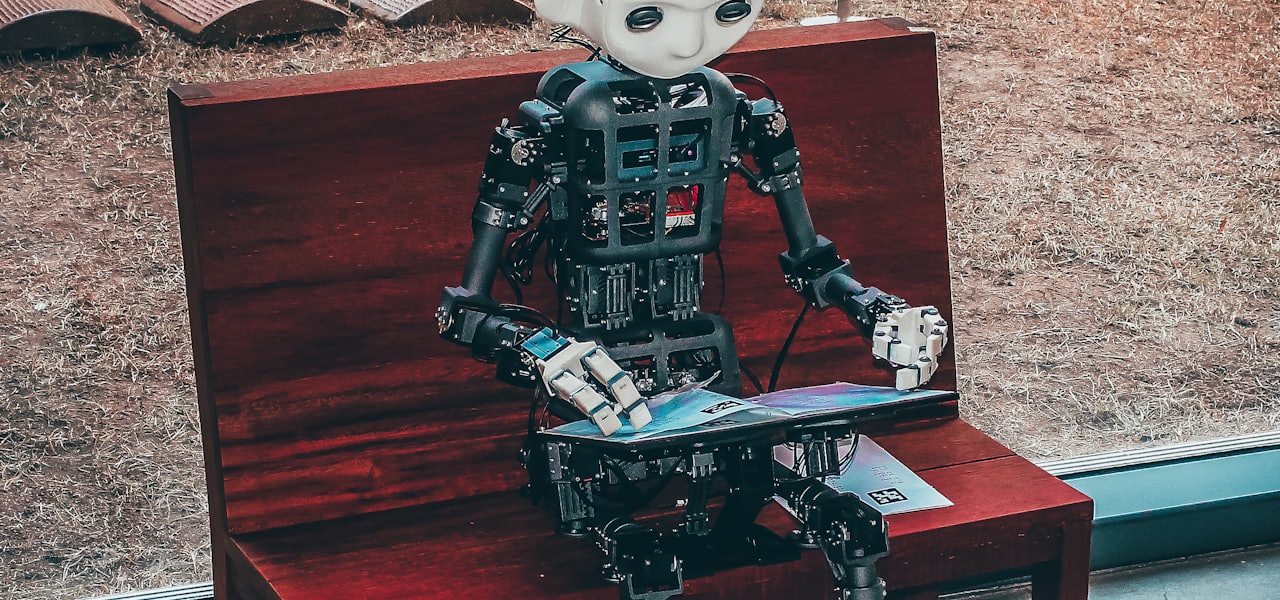
Evolutionary robotics is an embodied approach to Artificial Intelligence (AI) in which robots are automatically designed using Darwinian principles of natural selection. The design of a robot, or a subsystem of a robot such as a neural controller, is optimized against a behavioral goal (e.g. run as fast as possible). Usually, designs are evaluated in simulations as fabricating thousands or millions of designs and testing them in the real world is prohibitively expensive in terms of time, money, and safety. An evolutionary robotics experiment starts with a population of randomly generated robot designs. The worst performing designs are discarded and replaced with mutations and/or combinations of the better designs. This evolutionary algorithm continues until a prespecified amount of time elapses or some target performance metric is surpassed. Evolutionary robotics methods are particularly useful for engineering machines that must operate in environments in which humans have limited intuition (nanoscale, space, etc.). Evolved simulated robots can also be used as scientific tools to generate new hypotheses in biology and cognitive science, and to test old hypothesis that require experiments that have proven difficult or impossible to carry out in reality. == History == In the early 1990s, two separate European groups demonstrated different approaches to the evolution of robot control systems. Dario Floreano and Francesco Mondada at EPFL evolved controllers for the Khepera robot. Adrian Thompson, Nick Jakobi, Dave Cliff, Inman Harvey, and Phil Husbands evolved controllers for a Gantry robot at the University of Sussex. However the body of these robots was presupposed before evolution. The first simulations of evolved robots were reported by Karl Sims and Jeffrey Ventrella of the MIT Media Lab, also in the early 1990s. However these so-called virtual creatures never left their simulated worlds. The first evolved robots to be built in reality were 3D-printed by Hod Lipson and Jordan Pollack at Brandeis University at the turn of the 21st century.
Sarpa (snakebite app)
Sarpa or SARPA (Snake Awareness, Rescue and Protection app) is a snakebite app, an application for mobile devices developed in India to provide rapid, life-saving help for victims of snakebite, which kill an estimated 58,000 people a year in India. The app provides information about snakes, gets fast aid for people bitten, and helps in the development of antivenoms. Similar systems developed in India include SnakeHub, Snake Lens, Snakepedia, Serpent and the Big Four Mapping Project. The apps provide rapid response to snakebite incidents, often in remote areas, using a network of volunteers managed by local wildlife departments; their use can save human lives by providing rapid medical care, and also snakes, by helping to avoid interaction between the species. In 2026, it was announced that the app had plans to offer real-time contact from doctors directly from the app to provide users with decision-making advice.
Audio-visual speech recognition
Audio visual speech recognition (AVSR) is a technique that uses image processing capabilities in lip reading to aid speech recognition systems in recognizing indeterministic phones or giving preponderance among near probability decisions. Each system of lip reading and speech recognition works separately, then their results are mixed at the stage of feature fusion. As the name suggests, it has two parts. First one is the audio part and second one is the visual part. In audio part we use features like log mel spectrogram, mfcc etc. from the raw audio samples and we build a model to get feature vector out of it . For visual part generally we use some variant of convolutional neural network to compress the image to a feature vector after that we concatenate these two vectors (audio and visual ) and try to predict the target object.